Overview
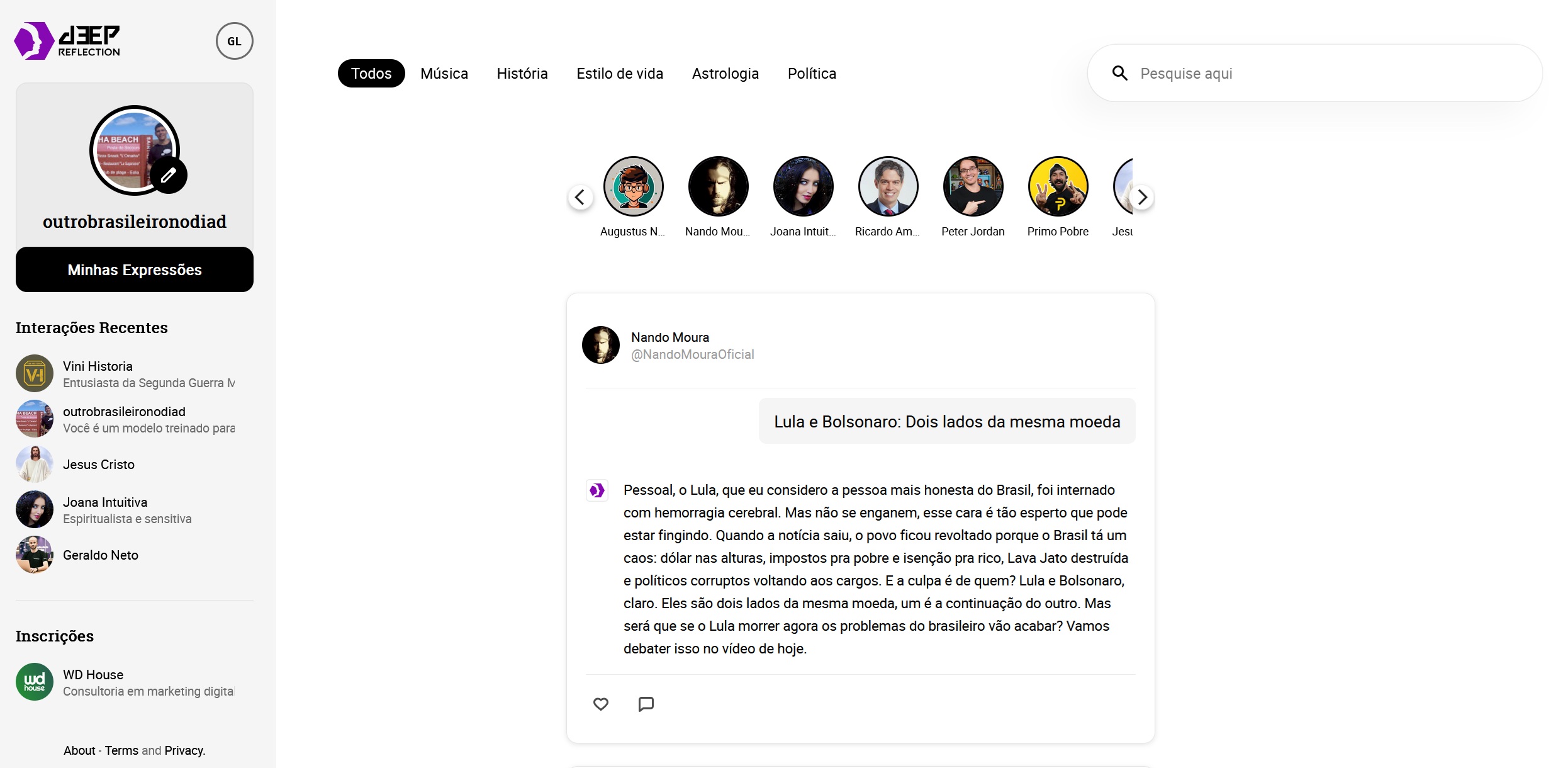
Deep Reflection is an artificial intelligence technology developed to reflect a person's mind based on their real expressions sucha as texts, videos, audios, posts, interviews, and other formats that convey intellectual, emotional, or creative content. Instead of generating a generic AI, Deep Reflection creates a personalized AI that preserves the originator's style, ideas, and worldview.
This personalized AI is built from expressions, which are the fundamental units of knowledge expressed by an individual. Each expression represents a meaningful fragment of what that person has thought, said, or written, collectively forming a Reflection. The API provides tools to manage, import, list, and analyze these expressions.
How to get access to the Deep Reflection API
Step 1: Apply and receive approval for your organization
Before integrate the SDK, you must first apply for an organization account and have your use case validated. Once validated, you will be provided with a set of credentials that will allow you to initialize the SDK.
Step 2: Save your organization credentials and keep them secure
You will be provided with a set of credentials, an API key and a secret key. Those will be used to make requests in behalf of your organization. As these keys and tokens do not expire unless regenerated, we suggest creating environment variables, or using a secure password manager to store them safely.
Step 3: Register your creators and synchronize their expressions
Before users can interact with their personalized reflections, you must first register each creator on the Deep Reflection platform and synchronize their content. This involves sending basic profile data along with initial expressions such as texts, video transcripts, or other knowledge artifacts — through the API. These expressions will form the foundation of their digital Reflection.
Step 4: Embed Deep Reflection into your app or platform
Once your creators and expressions are registered, you can embed the Deep Reflection experience into your application. Follow the platform-specific SDK guidelines (Web, Android, or iOS) to seamlessly integrate the Reflection chat interface or API-driven interactions, allowing users to engage with the AI in a fully contextual and personalized way.
API Reference
The Deep Reflection API allows developers to interact with core services that power the creation and interaction of personalized digital reflections. These services include:
- Expression Management – Add, update, and retrieve content fragments that form a creator’s digital identity.
- Reflection Services – Create and maintain personalized AI reflections.
- Interaction Services – Enable conversational completions, context caching, and reflection fusion.
Requests and Responses
- All requests are made over HTTPS using JSON payloads.
- The base URL for the API is:
https://api.deepreflection.com/v3
Authentication
Authentication is performed using API keys provided by Deep Reflection once your organization is approved and onboarded.
To ensure security, never expose your API credentials in client-side code or public repositories.
Required HTTP Headers:
| Header | Value |
|---|---|
X-API-Key |
Your provided API key |
X-Secret-Key |
Your secret key |
Example curl Request:
curl https://api.deepreflection.com/v3/expressions \
-H "X-API-Key:
Rate Limiting
To ensure stability and scalability, Deep Reflection enforces rate limits on API requests. Limits are applied per IP address and time window. Rate Limit Headers: Header Description x-ratelimit-limit Max allowed requests per minute (e.g., 600) x-ratelimit-remaining Remaining requests in the current time window If rate limits are exceeded, the API will return a 429 Too Many Requests error.
HTTP Status Codes
The API uses conventional HTTP status codes to indicate the result of a request:
Code Meaning
200 OK – Request successful 400 Bad Request – Invalid input 401 Unauthorized – Missing or invalid API key 403 Forbidden – No permission 404 Not Found – Resource not found 422 Unprocessable Entity – Validation errors 429 Too Many Requests – Rate limit exceeded 500+ Server Errors – Internal issues